
All plants and animals identified by science have been given a scientific name and classification. The scientific name is used to help prevent confusion and is used across languages. It is helpful when an organism has several common names, or names that change across an area. I just learned that a flower I know as Herb Robert is also called Stinking Bob and Death Comes Quickly. Fortunately, it has a scientific name: Geranium robertianum. That is the “official” name used whether you speak English or Arabic, Turkish or Swahili.
You might have noticed the first part of the name Geranium. That is the genus (plural genera). It means the plant is in the Geranium genus and it brings us to the classification. The classification identifies where the plant or animal fits within the tree of life. The closer the animal or plant within the family tree the more it has in common with others at the same level. Here is another geranium. You can see similarities with Herb Robert (Stinking Bob – love that name). Both are in the same genus of plants, geraniums, but they are different species of geraniums so they aren’t exactly the same.
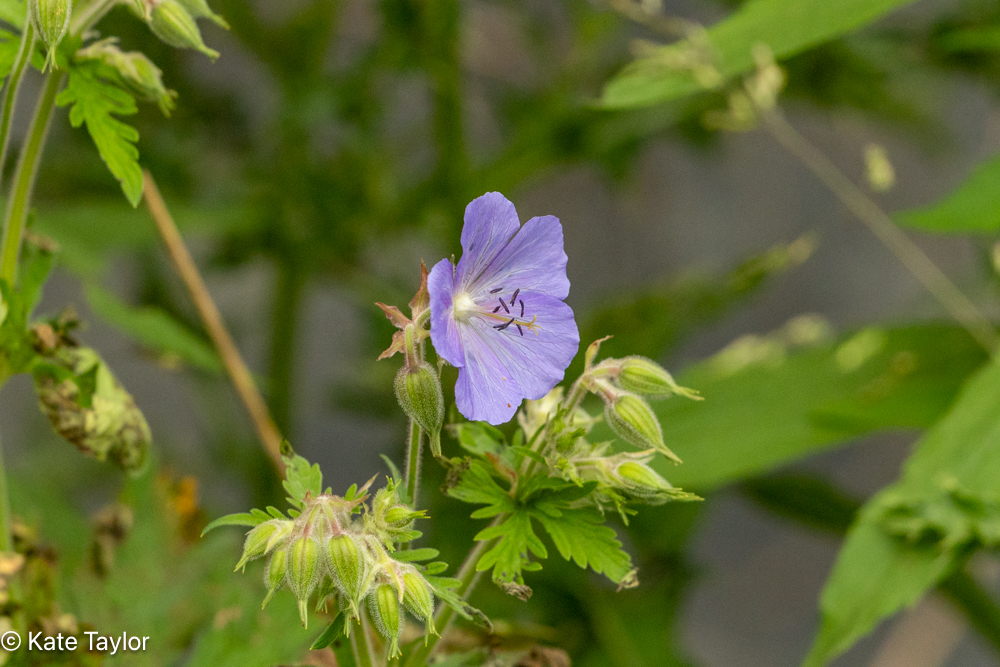
Classification starts with the most general category and moves through various divisions to the most specific. For our purposes the most specific division is species, or perhaps subspecies. For Herb Robert a fuller classification would be Kingdom: Plantae (Plants), Division: Magnoliophyta (Flowering Plants), Class: Magnoliopsida (Dicotyledons, aka Dicots), Order: Geraniales, Family: Geraniaceae Juss. (Geranium family), Genus: Geranium (geranium), species: Geranium robertianum. Several of these categories can also be divided into their own categories (subkingdom and superdivision, for example). It can get specific as you need. When dealing with plants I think I’m doing well if I can get to genus.
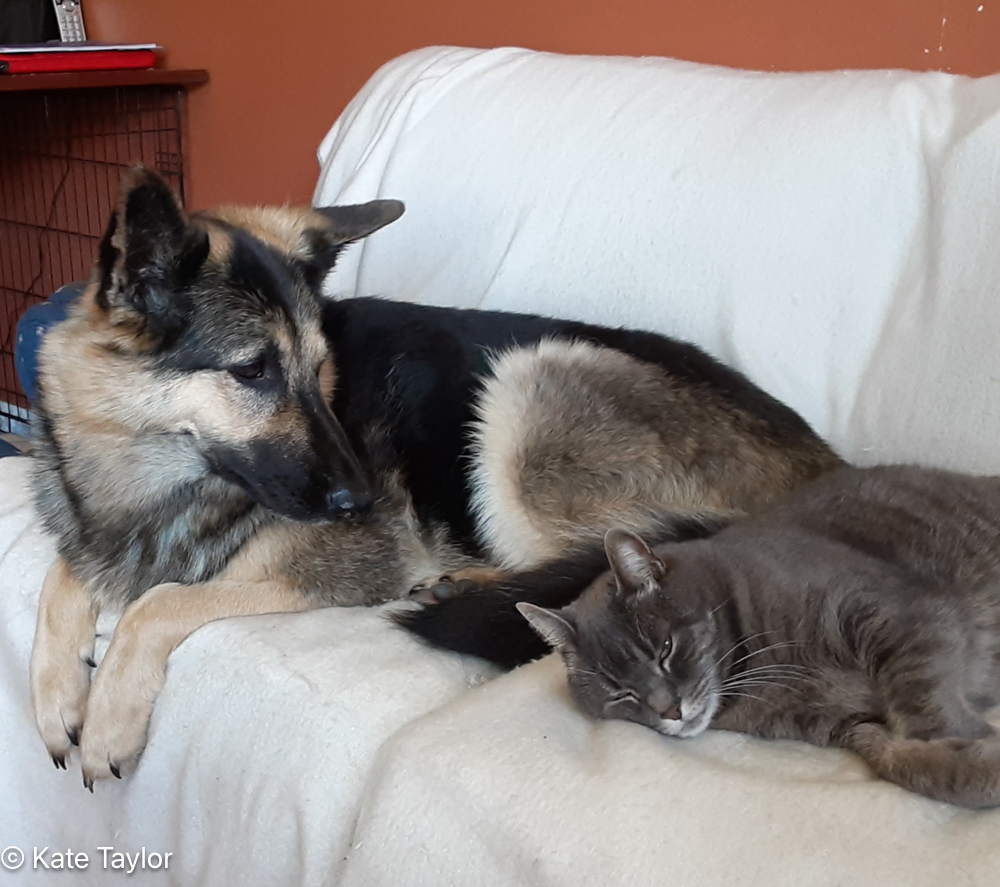
To use another familiar example: dogs and cats are not as closely related as the two geraniums pictured above. Cats and dogs are both in the Kingdom Animalia (animals), Class Mammalia (mammals) and Order Carnivora, (carnivores). From that we know they have much in common with all other carnivores within the same class. From there they differ, with cats branching into Family Felidae (felines), Genus Felis, and finally Species Felis catus and dogs into into Family Canidae, Genus Canis (canines), Species Canis lupus and finally Subspecies Canis lupus familiaris.
Organizsms are generally considered a similar species if they can successfully interbreed, although DNA is being used more and more to help classify. It’s not a cut and dry rule however. Some species can interbred or hybridize, although their offspring are usually infertile. Donkeys (Equus asinus) and horses (E ferus), for example are both genus Equus. They can interbred, but their young, called a mule or a hinny (E asinus x E ferus) are infertile.
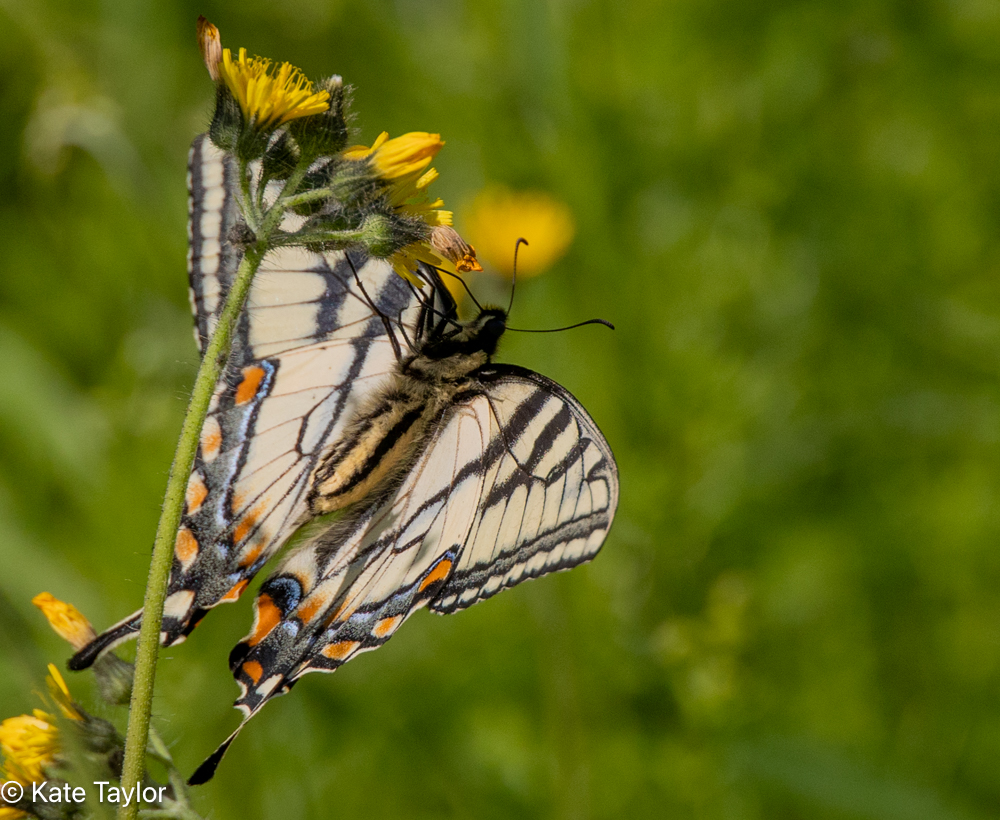
That brings us to my favorite taxa: Butterflies: but since this post is getting long I’ll save it for another day. Now you have something to look forward to.
Thanks for looking,
Stay well, be curious, learn things.
Kate
June, 2024
If you enjoyed this post perhaps you will enjoy these as well.
© Kate Taylor
Discover more from The Nature of Things
Subscribe to get the latest posts sent to your email.

 The Nature of Things
Looks like you have the first chapter of your new book here. 🙂 Cyn Drinkwine, CPDT-KA 802.595.9667
Playful Pup Dog Training Website http://www.playfulpupdogtraining.com/
*Knowing what to expect decreases anxiety. **Knowing what to do builds confidence.*
LikeLike