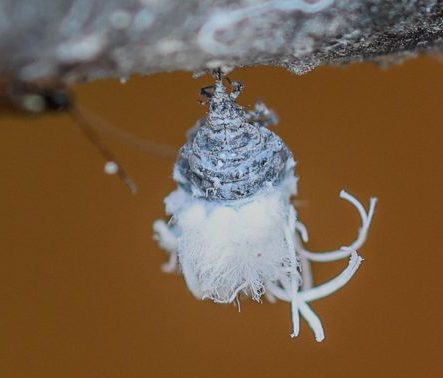
This is the time of year when you may notice small bits of fluff floating through the air. This is usually worth a second look. It may be milkweed, or aster seeds, but if you are lucky you might see what looks like a fly wearing a tutu. This tutu wearing insect is actually an aphid, one of a species of woolly aphids, aka flying tutus, fuzzy blue-butts, blue fuzzy-butts, snow bugs, fairy flies, cotton fairies, fluff bugs, fluff angels, poodle flies (you get the idea).
If you are gentle you can sweep out your hand and force a landing. Usually the aphid will stay long enough for a close look.
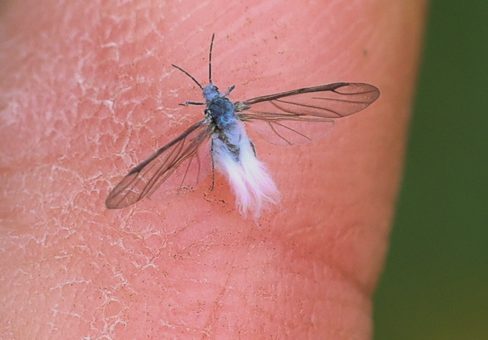
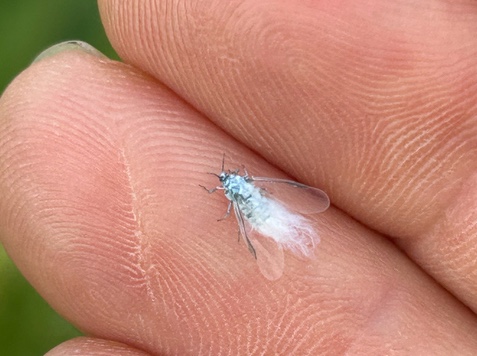
Aphids are insects that live by sucking liquid from plants. They are often considered pests as they can weaken plants, and can carry plant diseases. (An easy way to remove them is with a good blast of a hose.) Woolly aphids have specific host plants. I’m most familiar with the woolly alder aphid, but I’ve also heard of woolly birch aphids, woolly apple aphids and woolly maple aphids. I’m sure there are others as well and not all aphids are “woolly”.
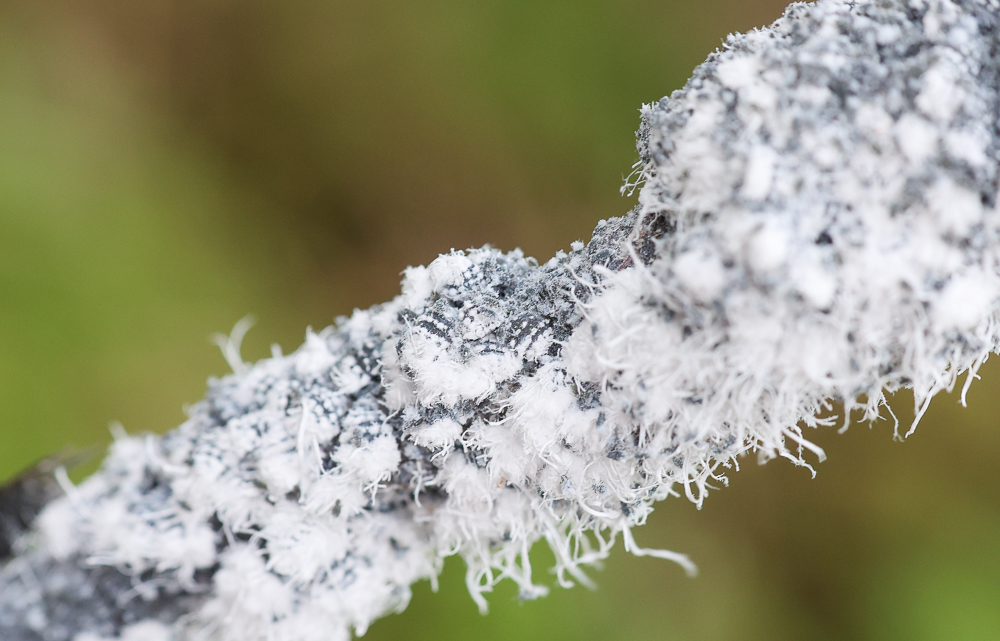
The “wool” of woolly aphids is actually wax secreted from small glands called cornicles. The wax is thought to have protective qualities. It’s unrelated to the honeydew aphids secrete from their anus which attracts ants who eat the honeydew and provide protection to the aphids. (There is a funny video on wikipedia showing aphids “flicking” away honeydew bubbles).
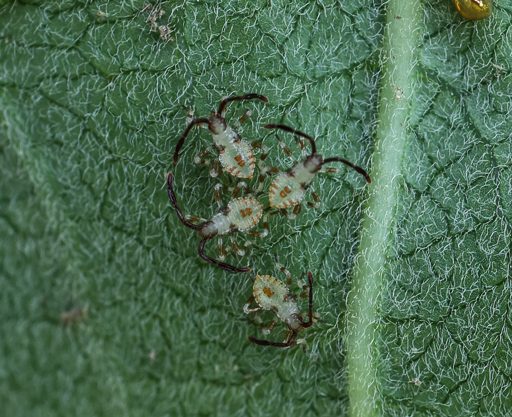
Aphid reproduction is fascinating and different species have different strategies. One that stuck with me, and seems to be relatively common in aphids, is parthenogenesis. In the spring female aphids give birth only to other females (some species have live birth, while others lay eggs). These females can be either winged or wingless. In some species these females are born with developing eggs within them. In other words, they are born pregnant with a clone of themselves and their mother.
These females give birth to more females, again without the assistance of a male. Many all-female generations are born this way over the summer. Being born pregnant makes many generations possible in a short period of time! Aphids typically live around a month, eating and giving birth, some flying to other plants to carry on reproducing.
In the fall a male generation is produced, also parthenogenically. Apparently the male birth is triggered by cold weather as (according to wikipedia) aphids continue reproducing without males in warm climates. These males are identical to their female counterparts except they are lacking one of the sex chromosomes and they are so short-lived they don’t have mouth parts. Their role is to mate and die. That means the final generation of the year is produced sexually. This generation of sexually impregnated females produces eggs which overwinter on the host plants, creating the first generation of females the following season.
While I do see flying tutus throughout the summer I seem to see a lot more in the late fall. I recommend looking around for them now. We may consider them pests, but they are creatures of this world as much as we are., and like so much of the world around us, they are worth a second glance.
Thanks for looking,
Stay well, be curious, love diversity,
Kate
If you enjoyed this post perhaps you will enjoy these as well.
- The Beauty of Winter
- Flying Tutus
- Glaciers to Gardens
- Night Lights in June
- Happiness Practice – Day 7
Discover more from The Nature of Things
Subscribe to get the latest posts sent to your email.

 The Nature of Things