It’s easy to take oxygen for granted. But, let’s not for a moment.
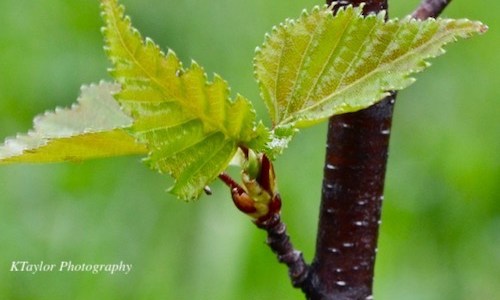
Instead, imagine a sugar maple with its broad, green, leaves. Zoom in on a single leaf, rustling slightly in the breeze. Think of a cell within that leaf. Now we’re getting closer to the action. Dive a bit deeper and you will see that each leaf cell contains from 10-100 organelles called chloroplasts. Each chloroplast is enclosed by a membrane within which are several structures. One of those structures is called a thylakoid. We’re almost there. Within the thylakoid are hundreds of molecules of chlorophyll.
Chlorophyll. That’s where our oxygen comes from. This wondrous molecule is the driving force behind that essential process called photosynthesis.
There are several different types of chlorophyll, each with a slightly different structure. Chlorophyll a, for instance, is C55H72O5N4Mg, while Chlorophyll b, is C55H70O6N4Mg.
Photosynthesis plays three important roles.
1) It feeds the tree (or other plant) providing energy for it to live.
2) It “fixes” carbon, meaning it takes carbon dioxide, which is a greenhouse gas and uses that carbon in other ways, thereby reducing the amount of CO2 in the air.
3) It releases oxygen into the air as a waste product. In essence, trees and other plants (as well as algae and some bacteria) “inhale” CO2 and “exhale” oxygen, while we humans and other animals do the opposite.
In the most common form of photosynthesis, the chlorophyll in a tree’s foliage (our maple leaf, for instance) uses sunlight as the energy needed to transform carbon dioxide and water into simple sugars which fuel the tree’s growth and reproduction.
Chemically speaking “sugar” refers of a number of different carbohydrates generally made up of carbon, hydrogen and oxygen.
Carbohydrates are essential in living organisms. Among other things they are used to store energy, to form physical structures and are a component of both RNA and DNA. Carbohydrates also break down into fats and other less useful molecules, hence too much sugar is bad for your health.
When light hits a tree each molecule of chlorophyll absorbs one photon and the energy of that interaction knocks loose one electron. That electron passes to another molecule then another and another in a flow of electrons called an electron transport chain.
Through a rather complicated process (described in another post) this energy allows the carbon, hydrogen and oxygen molecules to rearrange themselves from carbon dioxide and water into a simple sugar. The chlorophyll molecule ultimately regains the electron when a water molecule (H2O) gives up its O (oxygen) as a waste product.
The general formula looks like this: 6 CO2 + 6 H20 + photons = C6H12O6 + 6 O2.

The energy for that transformation comes from the sun. Multiply that several trillion, trillion times and you have a perfectly nice maple tree as well as a delicious, oxygen rich, atmosphere for humans and other animals.
Stay well, be curious, learn things.
Thanks for reading,
Kate
August, 2020
Discover more from The Nature of Things
Subscribe to get the latest posts sent to your email.

 The Nature of Things