

Imagine getting a letter from a dear friend inviting you to party where you would be exposed to smallpox.
This is how the history of vaccinations began in the West.
Smallpox was greatly feared as it was often deadly and left many survivors blind and / or badly disfigured. However, it was also known that once you had the disease you were immune from future infections. In many parts of the world people were deliberately infected by someone with a mild case of smallpox in the hope that it would also give the receiving individual a mild case and with it immunity from future potentially deadly infection. This worked often enough that many people were willing to take the risk. Hence smallpox parties.
In 1713 a woman named Mary Wortley Montage (1689-1762) was living in Turkey when she encountered the procedure. She described it to a friend in a letter home:
The small-pox, so fatal, and so generally amongst us, is here entirely harmless by the invention of ingrafting, which is the term they give it. There is a set of old women who make it their business to perform the operation every autumn, … People send to one another to know if any of their family has a mind to have the small-pox: they make parties for this purpose, and when they are met …, the old woman comes with a nut-shell full of the matter of the best sort of small-pox, and asks what veins you please to have opened. She immediately rips open that you offer [sic] to her with a large needle (which gives you no more pain than a common scratch), and puts into the vein as much venom as can lie upon the head of her needle, and after binds up the little wound with a hollow bit of shell; and in this manner opens four or five veins….The children, or young patients, play together all the rest of the day, and are in perfect health to the eighth. Then the fever begins to seize them, and they keep their beds two days, very seldom three. They have rarely about twenty or thirty [pox] in their faces, which never mark; and in eight days’ time they are as well as before their illness.”
The Letters and Works of Lady Mary Wortley Montigue, ed Lord Wharncliffe. 3rd edition, Henry G Bohn, London. 1840. p. 308.
Montigue herself had been disfigured by smallpox and her brother had died of the disease. She became an advocate for the procedure had her own children engrafted. (The boy was engrafted last Tuesday, and is at this time singing and playing, and very impatient for his supper. The Letters and Works of Lady Mary Wortley Montigue, ed Lord Wharncliffe (great grandson), 3rd edition, Henry G Bohn, London. 1840. p 352-353. )
Montigue’s information spread to the royal family who gave permission to test the procedure on a handful of prisoners and later on several orphans. Fortunately for the test subjects (the word volunteer does not seem appropriate) the engrafting worked and the process began to catch on.
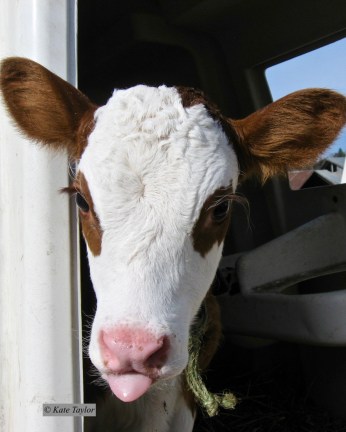 Then an English doctor named Edward Jenner (1749-1823) became interested in the fact that people who were regularly exposed to cowpox tended to be immune to smallpox. Cowpox was a similar although milder disease spread by cows. Jenner decided to substitute cowpox for the engrafting. He tested it on an 8 year old boy (one wonders about informed consent) and found it worked. Vacca is the Latin word for cow, so Jenner named the procedure vaccination.
This process was the state of the art when Louis Pasteur (1822-1895) entered the scene in the mid 1800s. His contribution was to make the process less of a matter of luck and more one of science. He did this by artificially creating a weakened version of the disease to engraft his patients. In another of the delightful ironies of science he made his discover by chance – actually by an over eager assistant.
Pasteur had succeeded in isolated the bacteria responsible for chicken cholera, a disease that was decimating the chicken population. Following Jenner’s example he was infecting the chickens with a culture of the cholera in hopes that a controlled infection would prevent a deadly one. However, many of the chickens died from the procedure. He was working on this problem and asked an assistant to inject the chickens with a fresh culture of the cholera. Fortunately for science, the assistant was eager for his vacat ion and left without doing the work. When he returned from vacation a month later he used the month old culture to inject the birds.
Surprisingly, the birds only showed mild signs of the cholera. When
The science is clear. Vaccinations are good for individuals and necessary for public health. Pasteur injected them with fresh culture they remained healthy. Pasteur assumed the old culture had been weakened by sitting for a month, yet still retained its ability to protect the chickens. This was the beginning of manipulating disease culture prior to injection. Pasteur called the resulting culture a vaccine in Jenner’s honor.
We now know that disease is caused by microorganisms that invade the body (plant or animal.) The invaders trigger an immune response causing the body to producing cells that (hopefully) make the germs harmless. Sometimes the immune cells simply engulf the invaders, other times chemicals between the two interact causing changes which render the invaders harmless.

Clearly, the more destructive the cells the more dangerous the disease. Therefore the goal is to strengthen the immune response so it reacts faster than the microorganisms can reproduce. By introducing a small amount of the disease into the body it “teaches” the immune cells to respond. Then, if the host is exposed to a larger amount of the disease the immune system can react more quickly than the disease can reproduce.
It’s a matter of which cells can reproduce more quickly, those of the immune system or those of the disease. That is what makes rapidly evolving bacteria and viruses so dangerous. If the disease can evolve quickly it is harder for the body to keep up. The need for a flu vaccine every year is because the virus responsible for the flu mutates so rapidly your body’s immune system may well not recognize this year’s flu even if you are immune to last year’s variety.
Since Pasteur’s time vaccines have been found for many other diseases and the public has benefited greatly. Polio has been mostly eradicated from the US. Measles has been greatly reduced, but it’s the eradication of smallpox that has been the greatest success story. In the mid 20th Century a massive effort went into controlling smallpox through world wide vaccination. Smallpox went from killing up to 30% of those infected to full eradication of the disease. Smallpox hasn’t been seen “in the wild” since the 1980’s and is thought to be gone from the world entirely, except for two labs which retain samples for study.
Unfortunately, the fear of vaccinations is on the rise and with it the dangers of infectious diseases. My next post will discuss some of those fears and the science behind them.
If you enjoyed this post perhaps you will also like:
Polar Vortex
Introducing the Glorious, Golden, Phi
fresh air anyone?
An Introduction to Clouds
Crate Training your Dog
Discover more from The Nature of Things
Subscribe to get the latest posts sent to your email.

 The Nature of Things
Interesting!!
On Fri, Nov 29, 2019 at 10:45 AM The Nature of Things wrote:
> notes with coffee posted: “Imagine getting a letter from a dear friend > inviting you to party where you would be exposed to smallpox. This is how > the history of vaccinations began in the West. Smallpox was greatly feared > as it was often deadly and left many survivors blind and / o” >
LikeLike