
What? You don’t know about Tabby’s Star? It’s a wonderful mystery. It began in 2009 when the Kepler space telescope began looking for planets around distant suns.

Because of the massive amount of data collected by Kepler (for 4 years it took data points on over 150,000 stars every half hour) the team behind the mission enlisted the help of citizen scientists. This group of amateur astronomers began combing through the data to see if they could find patterns that the computer missed. And they did.
They noticed an odd dip in the light coming from star number KIC 8462852. The citizen scientists alerted astronomer Tabetha Boyajin. Dr Boyajin and her crew looked at the data and found something that can’t be explained. The light coming from KIC 8462825 – soon to be known as Tabby’s Star – was fluctuating in an odd way.
The way scientists find planets is to look for dips in the light coming from a distant star. As a planet transits (orbits) in front of its star it will cause a tiny dip in the light that hits us here on Earth. So, a change in light is not unexpected. However, the light coming from Tabby’s Star was unusual in many respects. First, the change was seemingly random. It would dip for a few days, then later for a week. But, even stranger was the amount of drop in the light.
A well behaved planet should cause a tiny dip in light on a regular basis as it circles the sun. Jupiter, for example, blocks around a 1% of the light from our Sun.

The light from Tabby’s Star, on the other hand, dipped between 1%, 5%, then 15%, then, amazingly, over 20%. This is unheard of, especially since the timing of the dips are erratic. Theories started flying.
It seems there are as many theories as astronomers. However, while many are plausible they all – so far – have holes in them. It could be a gigantic planet, but it would have to be too big and the data isn’t consistent. It could be a swarm of comets, but the chances of tens of thousands of comets transiting in just the right way, just when we happen to look, is unlikely. Recently, it has been proposed that it is a giant planet with rings like Saturn (except around three times as large) that circles the sun such that the ring dips in front of the sun periodically. Well, maybe but the size is a problem as gravity would destroy the rings.
Now for the most interesting idea – perhaps a Dyson sphere is causing the dips. If you read Sci Fi you know what I’m talking about.
For those of you who don’t know Ursula LeGuin from Octavia Butler (both a good read), a Dyson sphere is an enormous structure built to encircle a star so as to use the sun’s energy to power civilization. Okay, this too is unlikely. But the exciting thing is that this fits the data perfectly. All it requires is alien intelligence way more advanced than we are.
Most astronomers believe it will end up being a natural phenomena. But, still, alien super structures haven’t been ruled out by the observed data. So stay tuned!

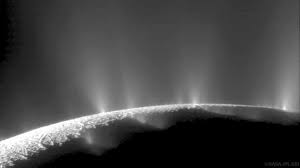
PS: We don’t have a photo of Tabby’s Star, it’s way too far away, so the featured image above is Enceladus. Enceladus is one of Saturn’s moons and is a contender for harboring alien life, (in this case microbes rather than builders of sun spanning structures).
PPS: Below is a wonderful TED talk given by Tabetha Boyajin in February 2016.
Discover more from The Nature of Things
Subscribe to get the latest posts sent to your email.

 The Nature of Things
2 thoughts on “Ongoing Mystery of Tabby’s Star”